Golden Monkeys in Rwanda: Behaviour, Habitat, Diet and Conservation
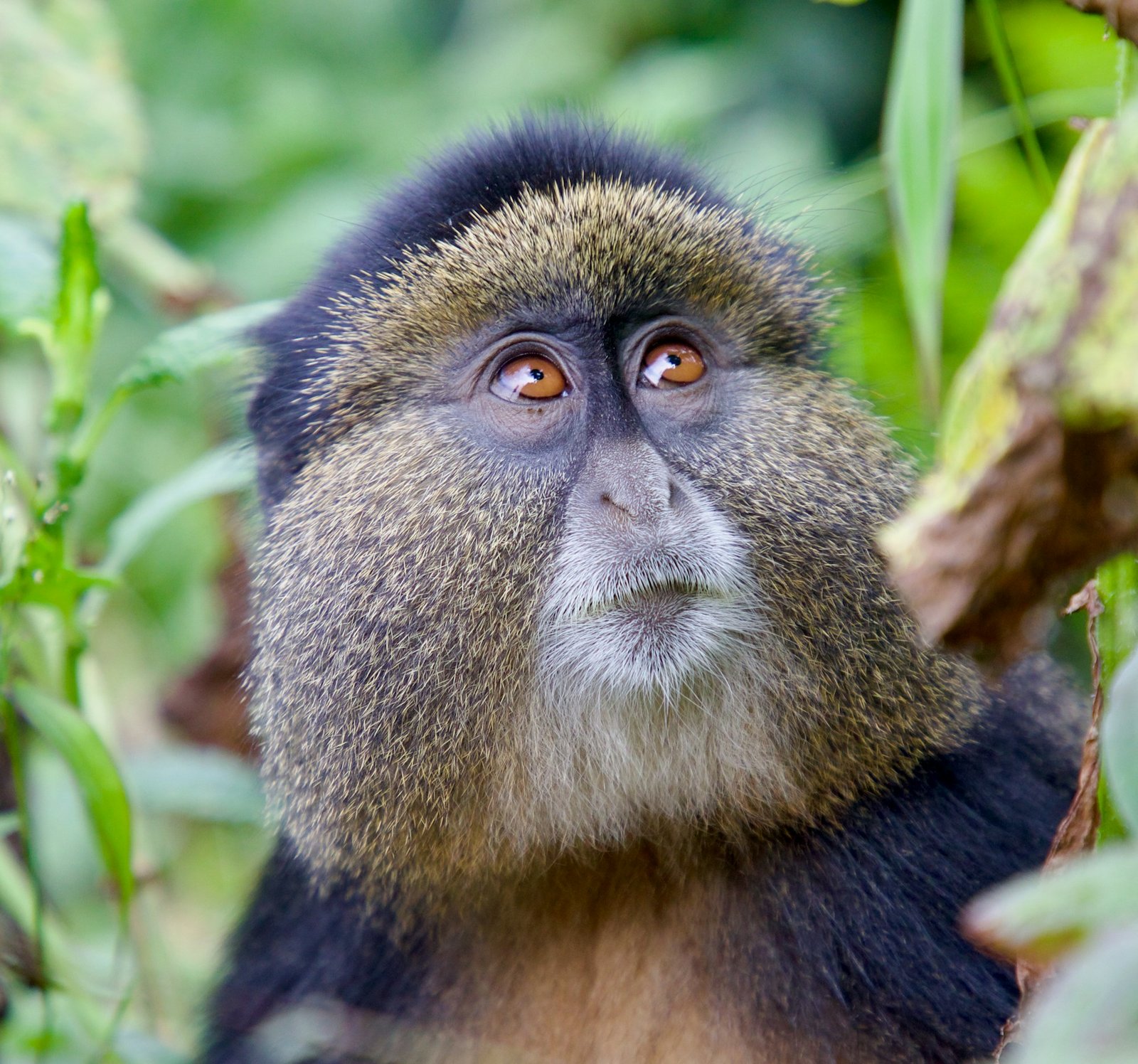
Golden monkeys are among the most fascinating primates found in East Africa. Recognised by their distinctive golden-orange fur and energetic behaviour, these rare monkeys inhabit the bamboo forests of the Virunga Mountains, including Rwanda’s Volcanoes National Park.
For wildlife enthusiasts, observing golden monkeys in their natural environment offers more than an exciting safari experience. It provides an opportunity to understand the importance of biodiversity, forest conservation and the protection of endangered primates.
Whether you are planning a wildlife holiday or researching Rwanda’s unique animals, understanding the behaviour, habitat, diet and conservation of golden monkeys makes the experience even more rewarding.
Understanding Golden Monkeys in Rwanda
Golden monkeys are a distinctive subspecies of blue monkey scientifically known as Cercopithecus mitis kandti. They are commonly recognised by the golden-orange patches of fur on their bodies, which make them different from many other African monkeys.
They are found in the Virunga volcanic region, which stretches across Rwanda, Uganda and the Democratic Republic of the Congo.
In Rwanda, one of the best places to observe them is Volcanoes National Park, an important protected area known for its mountain gorillas, golden monkeys and volcanic landscapes.
Why Are Golden Monkeys Special?
Golden monkeys are interesting for several reasons:
- Distinctive appearance: Their golden-orange fur makes them easy to recognise.
- Social behaviour: They live in groups and communicate through different sounds and movements.
- Forest dependence: They rely on the vegetation of high-altitude forests for food and shelter.
- Conservation importance: Their restricted distribution makes protecting their habitat particularly important.
- Wildlife tourism: They attract visitors interested in responsible primate tracking.
Golden monkeys are classified as endangered, making their conservation a significant priority throughout their range.
The Natural Habitat of Golden Monkeys
Golden monkeys inhabit the mountainous forests of the Virunga region. These forests provide the vegetation, food and shelter necessary for their survival.
In Rwanda, Volcanoes National Park protects part of this important ecosystem.
The Bamboo Forests
Bamboo forests are particularly important to golden monkeys because bamboo shoots and leaves form a significant part of their diet.
The dense vegetation also provides opportunities for climbing, feeding, resting and moving between different sections of the forest.
Visitors participating in golden monkey tracking often explore these bamboo-covered areas while following experienced park guides and trackers.
The Virunga Mountains
The Virunga Mountains are a chain of volcanic mountains extending across Rwanda, Uganda and the Democratic Republic of the Congo.
Their different elevations support several vegetation zones, including bamboo forests and montane forests.
The mountainous environment creates a specialised habitat for golden monkeys and other wildlife species.
Why Habitat Protection Matters
Golden monkeys depend on healthy forest ecosystems. When forests are cleared or fragmented, the animals may lose access to food, shelter and safe movement routes.
Protecting the forests therefore helps maintain the conditions necessary for their survival.
Conservation activities in the Virunga region focus on protecting natural vegetation, monitoring wildlife and reducing pressures on the surrounding ecosystem.
The Physical Appearance of Golden Monkeys
Golden monkeys have a distinctive appearance that makes them particularly attractive to wildlife photographers.
Their bodies generally have dark fur, with golden-orange colouring around the back and sides. Their faces are darker, creating a noticeable contrast with the brighter patches of fur.
Size and Body Structure
Golden monkeys are medium-sized primates with relatively long limbs and tails.
Their physical structure helps them move through the forest, climb bamboo stems and jump between branches.
Their strong limbs and flexible movements allow them to navigate vegetation that may be difficult for larger animals.
Differences Between Golden Monkeys and Other Monkeys
Although golden monkeys belong to the same broader primate family as several other African monkeys, their distinctive colouring and restricted distribution make them especially recognisable.
They should also not be confused with mountain gorillas. Both species inhabit the Virunga region, but they have very different physical characteristics, diets and social structures.
Golden Monkey Behaviour
One of the most interesting aspects of golden monkeys is their energetic and social behaviour.
They spend much of their time moving through vegetation, searching for food and interacting with other members of their groups.
Visitors tracking golden monkeys may observe several behaviours during their encounter.
Social Groups
Golden monkeys live in social groups that can contain numerous individuals.
Group members interact through grooming, feeding, playing and other social activities.
Their social structure helps them maintain relationships and coordinate their movements within the forest.
Feeding Behaviour
Golden monkeys spend a considerable amount of time searching for food.
They move between feeding areas, examining vegetation and selecting suitable plant material.
Their feeding habits influence how they use the forest and which areas they visit throughout the day.
Grooming and Social Interaction
Grooming is an important social activity among many primates, including golden monkeys.
Individuals may groom one another to remove dirt and parasites while strengthening social relationships.
Young monkeys may also engage in playful activities, chasing one another through the vegetation and developing physical skills.
Movement Through the Forest
Golden monkeys are agile animals that move through bamboo vegetation with remarkable speed.
They can climb, jump and balance on branches, making them exciting to observe.
Their movements can also make photography challenging because they rarely remain in one position for long.
What Do Golden Monkeys Eat?
Golden monkeys are primarily herbivorous and feed on a variety of plant materials available in their forest habitat.
Their diet is closely connected to the vegetation found in the Virunga Mountains.
Bamboo Shoots and Leaves
Bamboo is one of the most important food sources for golden monkeys.
They feed on different parts of the bamboo plant, including young shoots and leaves.
The availability of bamboo helps determine where they spend much of their time.
Fruits and Other Vegetation
Golden monkeys also consume other plant materials depending on seasonal availability.
Their diet may include:
- Fruits.
- Leaves.
- Flowers.
- Seeds.
- Other edible plant parts.
This varied diet allows them to use different sections of their forest habitat.
Why Their Diet Matters
Feeding behaviour plays an important role in the ecology of golden monkeys.
As they move through the forest searching for food, they interact with different plant communities and contribute to the wider functioning of the ecosystem.
Understanding their diet also helps conservationists monitor habitat quality and identify changes in the availability of important food sources.
Reproduction and Family Life
Like other primates, golden monkeys reproduce and raise their young within social groups.
Young monkeys depend on their mothers for protection, feeding and learning important behaviours during their early development.
Caring for Young Monkeys
Mother monkeys provide close care for their infants.
Young monkeys gradually develop the ability to move independently, interact with other group members and explore their surroundings.
During golden monkey tracking, visitors may sometimes observe mothers carrying or caring for their young.
Learning Through Interaction
Young golden monkeys learn many behaviours through observation and interaction.
They may watch adults feeding, moving through the forest and communicating with other group members.
Play also helps young monkeys develop coordination and social skills.
Golden Monkeys and Their Role in the Ecosystem
Golden monkeys are part of a complex forest ecosystem that supports numerous plants and animals.
Their feeding habits, movement and interactions contribute to the natural processes taking place within the forest.
Supporting Forest Biodiversity
By feeding on different plant materials and moving through the forest, golden monkeys participate in the ecological relationships that sustain biodiversity.
Their presence also forms part of the wider food web within the Virunga ecosystem.
An Indicator of Forest Health
Golden monkeys depend on specific forest conditions, especially the availability of suitable vegetation.
Monitoring their populations and habitat can therefore provide useful information about changes affecting the ecosystem.
Protecting their environment also benefits other species that depend on the same forest
Threats Facing Golden Monkeys
Despite their importance, golden monkeys face several conservation challenges.
Their restricted distribution makes them particularly vulnerable to changes in their natural habitat.
Habitat Loss and Fragmentation
Deforestation and the expansion of human activities can reduce the amount of suitable forest available to golden monkeys.
When natural habitats become fragmented, animals may find it harder to move between feeding and resting areas.
Human-Wildlife Conflict
Communities living near protected areas sometimes depend on land and natural resources located close to wildlife habitats.
This can create conflicts when human activities overlap with areas used by wild animals.
Conservation programmes therefore need to consider both wildlife protection and the needs of surrounding communities.
Disease Risks
Like other primates, golden monkeys can be vulnerable to certain diseases.
Close contact with humans may increase the possibility of disease transmission, which is one reason visitors must follow strict wildlife-viewing guidelines.
Climate and Environmental Changes
Changes in temperature, rainfall and vegetation can affect the availability of suitable habitats and food sources.
Long-term environmental changes may place additional pressure on species that depend on specialised mountain ecosystems.
Golden Monkey Conservation in Rwanda
Rwanda has established protected areas and conservation programmes to safeguard important wildlife species and their habitats.
Volcanoes National Park plays a central role in protecting golden monkeys and the wider Virunga ecosystem.
Protected Areas and Wildlife Monitoring
Protected areas help limit damaging activities within important wildlife habitats.
Park authorities and conservation partners also monitor wildlife populations, study animal behaviour and support activities aimed at protecting biodiversity.
Community Participation
Conservation is more effective when surrounding communities benefit from protecting natural resources.
Community-based initiatives can support environmental education, sustainable livelihoods and responsible tourism.
When local people recognise the value of wildlife conservation, they can become important partners in protecting the environment.
Responsible Tourism
Tourism provides an opportunity for visitors to learn about golden monkeys while supporting conservation-related activities.
Golden monkey tracking is organised under park regulations designed to protect the animals and minimise disturbance.
Visitors are expected to follow the guides’ instructions, maintain appropriate distances and avoid feeding or touching the monkeys.
Through responsible tourism, travellers can enjoy wildlife experiences while respecting the natural environment.
Experiencing Golden Monkeys in Their Natural Habitat
Learning about golden monkeys becomes even more meaningful when you observe them in the forest.
Golden monkey tracking allows visitors to watch their feeding habits, social interactions and movement through bamboo vegetation.
The experience takes place in Volcanoes National Park, where trained guides and trackers help visitors locate the animals.
What Visitors Can Expect
A typical tracking experience includes:
- Arriving early at the park headquarters in Kinigi.
- Completing permit checks and attending a briefing.
- Joining an assigned tracking group.
- Following guides into the forest.
- Locating a golden monkey troop with the assistance of trackers.
- Observing the animals during the permitted viewing period.
- Returning from the forest with the guide.
The experience combines wildlife observation, physical activity and an opportunity to learn about the Virunga ecosystem.
Frena Adventures can help travellers organise golden monkey tracking as part of a wider Rwanda safari.
Combining Golden Monkey Tracking with Other Experiences
Visitors who have more time can combine golden monkey tracking with gorilla trekking and other activities.
Gorilla trekking provides a different opportunity to observe another remarkable primate species within the same broader mountain region.
Travellers can explore Rwanda Gorilla Trips when considering gorilla-focused safari arrangements. Those with limited time may also consider a one-day golden monkey trekking experience in Rwanda.
For a well-organised wildlife holiday, Frena Adventures can assist with planning activities and coordinating the different parts of a safari.
Frequently Asked Questions About Golden Monkeys in Rwanda
1. Are golden monkeys endangered?
Yes. Golden monkeys are classified as endangered. Their restricted distribution and dependence on particular forest habitats make conservation efforts important.
2. Where can I see golden monkeys in Rwanda?
The best-known destination for golden monkey tracking in Rwanda is Volcanoes National Park, located in the north-western part of the country.
3. What is the scientific name of the golden monkey?
The golden monkey is scientifically known as Cercopithecus mitis kandti. It is a subspecies of the blue monkey.
4. What do golden monkeys eat?
They mainly feed on plant materials, including bamboo shoots, leaves, fruits, flowers and seeds.
5. Are golden monkeys aggressive?
Golden monkeys generally avoid unnecessary confrontation. However, they are wild animals and should never be approached, touched or fed by visitors.
6. How long do golden monkeys live?
Their lifespan can vary depending on environmental conditions and individual circumstances. Reliable lifespan estimates specifically for wild golden monkeys are limited, so it is best not to assume a single fixed figure.
7. Can I photograph golden monkeys?
Yes. Visitors can photograph golden monkeys during the tracking experience, provided they follow park guidelines and avoid flash photography or behaviour that disturbs the animals.
8. Why is bamboo important to golden monkeys?
Bamboo provides an important food source and forms a major part of the habitat used by golden monkeys in the Virunga Mountains.
Conclusion
Golden monkeys are remarkable primates whose distinctive appearance, social behaviour and dependence on mountain forests make them an important part of Rwanda’s natural heritage.
Their survival depends on the protection of suitable habitats, responsible wildlife management and cooperation between conservation organisations, park authorities and surrounding communities.
Exploring their behaviour, diet and natural environment also helps visitors appreciate why conservation matters beyond the excitement of a safari.
For travellers interested in discovering these fascinating animals, golden monkey tracking offers an opportunity to experience the biodiversity of the Virunga Mountains firsthand. With assistance from Frena Adventures, visitors can make this wildlife encounter part of a memorable journey through Rwanda.