How Long Does It Take to Find Gorillas in Rwanda?
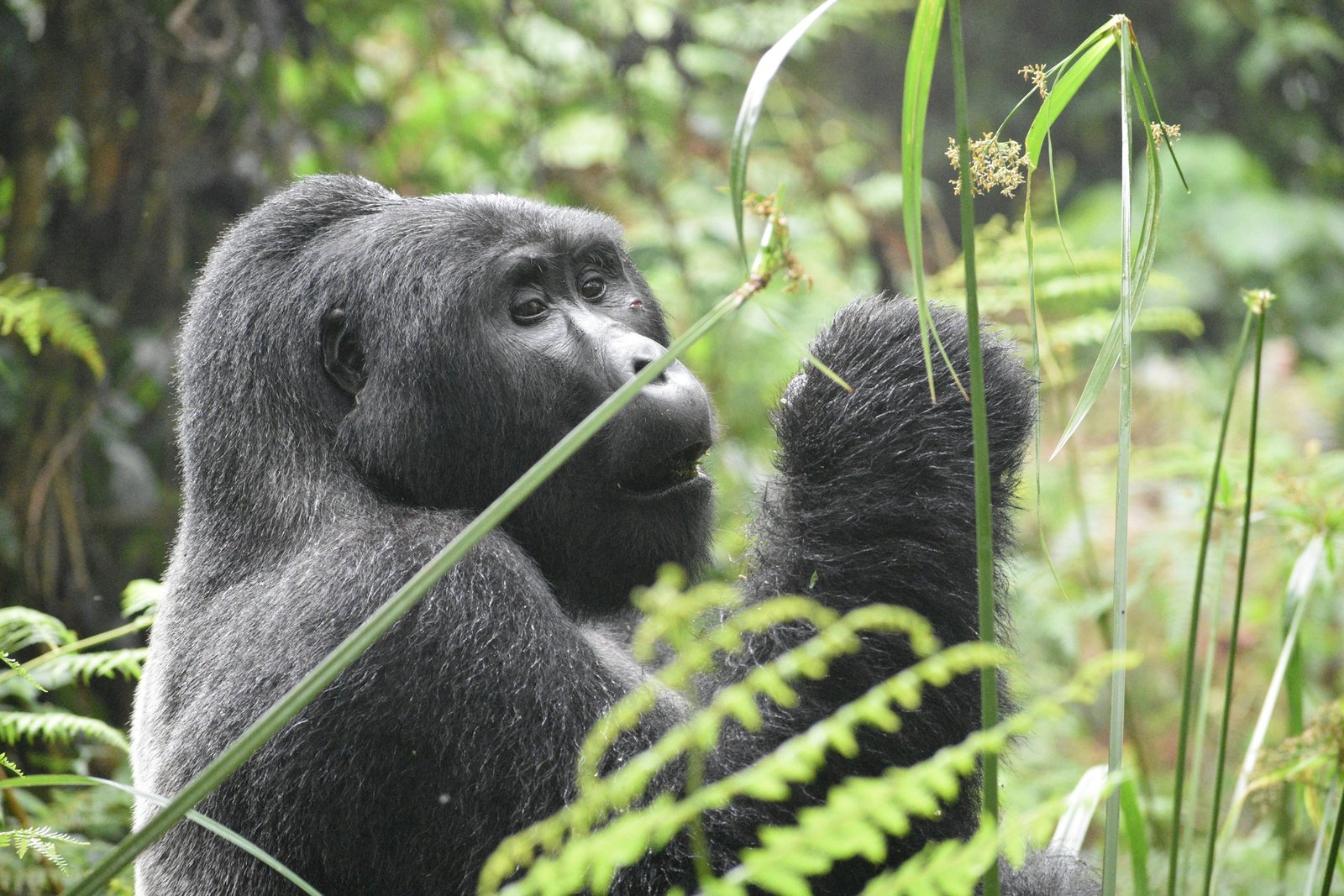
Finding mountain gorillas in their natural habitat is one of the most exciting experiences available to wildlife enthusiasts visiting Rwanda. Unlike conventional wildlife safaris, where visitors can observe animals from a vehicle, gorilla trekking involves walking through mountainous forests in search of habituated gorilla families.
One of the most common questions travellers ask before organising their adventure is how long it actually takes to find gorillas in Rwanda. The answer varies because mountain gorillas are wild animals that move freely within their natural habitat. Some visitors may locate their assigned gorilla family after approximately 30 minutes of hiking, while others may spend four hours or even longer searching through the forest.
The duration depends on several factors, including the location of the gorilla family, the terrain, weather conditions and the movements of the animals. Experienced trackers work alongside park guides to locate the gorillas and help trekking groups navigate the forest.
Rwanda offers particularly rewarding opportunities for this experience because of its established mountain gorilla conservation programme and organised trekking activities in the northern part of the country.
For travellers planning their adventure with Frena Adventures, understanding how the tracking process works can help them prepare for the physical demands, appreciate the conservation efforts involved and make realistic travel arrangements.
This guide explores how long it takes to find mountain gorillas, how trackers locate them, what influences the search duration and what visitors should expect during their trekking experience.
1. How Long Does It Usually Take to Find Mountain Gorillas in Rwanda?
The time required to find mountain gorillas in Rwanda varies considerably. Some trekking groups locate their assigned families within approximately 30 minutes, while others may spend four hours or more hiking through the forest before encountering them.
The difference largely comes down to where the gorilla family is located on the morning of the trek.
Mountain gorillas do not remain in one particular location. They move through their natural habitat while feeding, resting, socialising and searching for suitable vegetation. Consequently, a family that was relatively close to a trekking starting point on the previous day might be considerably farther away the following morning.
A general indication of the search duration is:
| Approximate Hiking Time | What Visitors May Experience |
|---|---|
| 30 minutes – 1 hour | A relatively short trek to a nearby gorilla family |
| 1–2 hours | A moderate hike through forest vegetation |
| 2–3 hours | A longer trek involving changing terrain and elevations |
| 3–4 hours | A demanding search through more distant forest areas |
| More than 4 hours | An extended trek that may involve considerable hiking |
These are indicative durations rather than guaranteed trekking times. Actual conditions can produce shorter or longer experiences.
It is also important to distinguish the time spent searching for the gorillas from the entire trekking activity. Once the family is located, visitors are generally permitted a maximum of one hour with the animals. They must then make the return journey.
Travellers should therefore avoid assuming that finding the gorillas after one hour means the entire activity will be completed within that period.
2. How Do Trackers Find Mountain Gorillas in Rwanda?
One of the most fascinating aspects of gorilla trekking is the work performed by experienced trackers.
Although visitors participate in the search, they are not expected to locate the gorillas independently. Specially trained trackers work within the forest to monitor the movements of habituated gorilla families and communicate relevant information to the trekking guides.
Their experience is particularly important because mountain gorillas inhabit dense vegetation and mountainous environments where locating wildlife can be challenging.
Following Previous Gorilla Movements
Trackers use information about the previous locations and movements of gorilla families to establish where they are likely to be found.
Mountain gorillas generally move within established home ranges. Although their daily movements vary, knowledge of their feeding and resting patterns helps trackers identify areas worth investigating.
Information gathered during previous tracking activities can therefore provide a useful starting point for the morning’s search.
Identifying Signs of Gorilla Activity
Trackers are familiar with the physical signs that indicate gorillas have recently passed through an area.
These may include:
-
Broken vegetation and freshly eaten plants.
-
Feeding remains around particular locations.
-
Nesting sites where gorillas rested during the previous night.
-
Footprints and other signs of movement.
-
Sounds and other indications of nearby gorilla activity.
Recognising these signs requires considerable experience and familiarity with the forest environment.
Communicating with Trekking Guides
The tracking team and the guides accompanying visitors work together to coordinate the search.
Information about the gorillas’ movements helps guides determine which direction to take and whether the original route needs to be adjusted.
This coordination is particularly valuable when gorilla families move farther into the forest than initially anticipated.
Understanding Gorilla Behaviour
Trackers also develop knowledge of mountain gorilla behaviour.
They understand that gorilla families have different movement patterns depending on feeding opportunities, resting periods and interactions between family members.
This knowledge helps them interpret the signs encountered during the search.
The work of trackers is one of the reasons organised gorilla trekking is possible. Their efforts help reduce uncertainty while allowing visitors to experience mountain gorillas without disturbing their natural behaviour.
3. Why Does It Sometimes Take Longer to Find Gorillas?
The duration of the search depends on several environmental and natural factors.
Even with experienced trackers, finding mountain gorillas is not always straightforward. Their natural environment is constantly changing, and visitors must adapt to the conditions encountered during the trek.
Here are some of the main reasons why certain gorilla trekking experiences take longer than others.
A. Movement of Gorilla Families
The most significant factor is the movement of the gorilla families themselves.
Mountain gorillas spend much of their day moving around their habitat in search of food. They feed on leaves, shoots, stems and other vegetation available within their environment.
A family may move considerable distances between feeding and resting locations.
Consequently, trackers cannot guarantee that the gorillas will be found in exactly the same place where they were observed previously.
B. Distance from the Starting Point
The location of the assigned family determines how far visitors must travel.
Some gorilla families may be located relatively close to accessible trekking areas. Others may be deeper within the forest, requiring visitors to walk for several hours.
The distance is not necessarily the same for every trekking group, even when visitors participate in the activity on the same morning.
C. Mountainous Terrain
Rwanda’s mountain gorilla habitat includes steep slopes, uneven ground and thick vegetation.
Some trekking routes are relatively manageable, while others require visitors to navigate challenging sections involving muddy paths, dense vegetation and changes in elevation.
Walking uphill for extended periods can significantly increase the time required to reach a gorilla family.
D. Weather Conditions
Rainfall can influence trekking conditions.
Wet weather may leave the forest floor slippery, making certain sections more difficult to navigate. Visitors and guides may need to reduce their walking speed to maintain safety.
Rain can also affect visibility and general comfort during the search.
E. Physical Fitness of Visitors
Different visitors have different levels of physical fitness.
Some people can comfortably walk uphill for extended periods, while others require more frequent breaks.
Trekking guides generally consider the abilities of their groups when managing the experience. Visitors should communicate any physical limitations before the trek begins.
F. Vegetation Density
Mountain gorilla habitats contain thick vegetation, including bamboo, shrubs and other forest plants.
In certain areas, vegetation can make movement difficult and require guides to identify suitable routes through the forest.
The density of vegetation can therefore influence both walking speed and the time required to locate the gorillas.
4. What Happens During the Search for Mountain Gorillas?
Understanding the actual tracking process helps visitors appreciate why the experience can take several hours.
Gorilla trekking is organised rather than being an independent forest expedition. Visitors are accompanied by trained guides and supported by experienced tracking teams.
The experience generally follows several stages.
Stage 1: Arrival at the Park Headquarters
Visitors are expected to report to the designated visitor registration centre at Kinigi at approximately 7:00 a.m.
During registration, park officials verify visitor information and organise the morning’s activities.
Arriving early is important because the trekking programme begins with a formal briefing.
Stage 2: Morning Briefing and Group Allocation
Before entering the forest, visitors receive instructions explaining the trekking procedures and conservation rules.
The briefing also introduces the groups to their guides and provides information about the assigned gorilla families.
Rwanda’s standard trekking arrangements limit each visitor group to a maximum of eight people per habituated gorilla family.
Stage 3: Travelling to the Trekking Starting Point
Depending on the assigned family, visitors may need to travel by vehicle from the headquarters to a particular trailhead.
The distance and driving time vary according to the family’s location and the arrangements for that day’s trek.
From there, visitors begin the actual forest hike.
Stage 4: Searching Through the Forest
This is the stage that determines how long it takes to find gorillas in Rwanda.
Visitors follow their guides through the forest while trackers help identify the direction in which the gorilla family has moved.
The group may encounter different types of terrain along the way, including steep slopes, muddy sections and dense vegetation.
The search continues until the assigned gorilla family is located.
Stage 5: Encountering the Gorilla Family
Once the gorillas are found, visitors are guided into an appropriate observation position.
This is the moment many travellers have been anticipating.
Visitors can observe the silverback, adult females, young gorillas and infants as they interact within their family.
The observation period is limited to a maximum of one hour.
Stage 6: Returning from the Forest
After the encounter, visitors leave the gorilla family and begin the return journey.
The return hike may take additional time depending on the route and the terrain.
This is why travellers should keep their schedules flexible, even after successfully locating the gorillas.
5. Is Finding Gorillas Guaranteed During a Rwanda Gorilla Trek?
Gorilla trekking offers a very high likelihood of encountering mountain gorillas, largely because experienced trackers work ahead of the visitor groups to monitor the animals.
However, it is important to understand the difference between a highly organised wildlife experience and an absolute guarantee.
Mountain gorillas are wild animals. Their movements cannot be controlled, and their behaviour does not follow a fixed timetable.
The tracking teams use their experience and knowledge to locate the assigned families, but visitors should recognise that wildlife encounters always involve some natural uncertainty.
Rwanda’s park authorities also have arrangements for situations where a trekking group spends the entire day searching without successfully making contact with its assigned gorilla family. Applicable permit conditions and remedies should be confirmed with the authorities when booking.
This is another reason to obtain accurate information about permits and trekking arrangements before travelling.
For visitors organising their safari through Rwanda Gorilla Trips, understanding these arrangements can help with planning expectations and preparing for the experience.
6. Does the Time of Year Affect How Long It Takes to Find Gorillas?
The season can influence trekking conditions, although it does not determine exactly where a gorilla family will be located.
Rwanda experiences alternating wetter and drier periods, and these conditions affect the general environment in which mountain gorillas live.
Dry Seasons
The relatively drier periods generally occur around June to September and December to February.
During these months, trekking trails may be less muddy, making certain sections easier to navigate.
However, dry-season trekking does not automatically mean that visitors will find gorillas faster.
The assigned family may still be located deep within the forest or on challenging terrain.
Rainy Seasons
The wetter periods generally occur around March to May and October to November.
Rainfall can make some trekking routes slippery and increase the physical demands of walking through the forest.
Visitors may need additional time to navigate difficult sections safely.
Nevertheless, rainy-season trekking also offers opportunities to experience the forest in its lush and vibrant condition.
Which Season Is Better?
The best season depends on individual preferences.
Travellers who prioritise relatively manageable trail conditions may prefer the drier months.
Those who are comfortable with wetter conditions may still enjoy an excellent trekking experience during the rainy periods.
Regardless of the season, visitors should prepare for changing weather and remember that gorilla movements remain unpredictable.
7. How Can You Prepare for a Long Gorilla Trek?
Preparing for a potentially long search is essential.
Although some visitors may locate their gorilla families relatively quickly, others should be ready to walk for several hours through mountainous forest terrain.
Proper preparation improves comfort and helps visitors enjoy the experience.
Wear Appropriate Hiking Clothing
Choose comfortable clothing suitable for walking through a forest environment.
Long trousers and long-sleeved shirts are particularly useful because they provide protection against vegetation and stinging nettles.
A lightweight waterproof jacket is also advisable because mountain weather can change quickly.
Choose Suitable Footwear
Sturdy hiking boots with good grip are important.
Some sections of the trekking routes can be muddy, slippery and uneven.
Shoes with suitable ankle support can also improve stability when navigating steep sections.
Carry Enough Drinking Water
Walking for several hours requires proper hydration.
Visitors should carry sufficient drinking water for the trek and follow their guides’ instructions about when and where drinking is permitted.
Eating and drinking are not permitted while observing the gorillas.
Consider Hiring a Porter
Visitors can hire local porters to assist with carrying backpacks and navigating difficult sections.
Apart from making the trek more comfortable, hiring a porter provides an opportunity to support people living in communities surrounding the park.
Prepare Physically
Visitors do not need to be professional athletes to participate in gorilla trekking.
However, a reasonable level of physical fitness is beneficial.
Walking, light hiking and regular physical activity before travelling can help prepare the body for the experience.
Travellers with concerns about their physical ability should communicate with their tour operator and seek appropriate medical advice where necessary.
Carry Essential Items
| Item | Purpose |
|---|---|
| Hiking boots | Provide grip and stability |
| Waterproof jacket | Protect against rain |
| Long trousers | Protect against vegetation |
| Long-sleeved shirt | Offer additional protection |
| Drinking water | Maintain hydration |
| Small backpack | Carry personal essentials |
| Gardening gloves | Protect hands when navigating vegetation |
| Walking stick | Assist with balance |
| Camera | Capture memories without flash |
For visitors seeking assistance with their trekking preparations, Frena Adventures can help organise the safari arrangements and provide guidance on preparing for the adventure.
8. How Long Should You Allow for the Entire Gorilla Trekking Experience?
One mistake travellers sometimes make is planning their day around the expected time of the gorilla encounter alone.
Finding the gorillas is only one part of the overall activity.
Visitors must also account for registration, the briefing, transportation to the starting point, the forest search, the one-hour observation period and the return journey.
A practical outline is shown below.
| Activity | Approximate Timing |
|---|---|
| Arrival and registration | Around 7:00 a.m. |
| Briefing and group allocation | Early morning |
| Transfer to the trekking starting point | Varies |
| Search for gorillas | 30 minutes to 4 hours or more |
| Gorilla observation | Maximum 1 hour |
| Return hike | Varies |
| Return to accommodation | Depends on the overall trek |
These times are indicative and should not be interpreted as a guaranteed itinerary.
Travellers should avoid scheduling flights, long road transfers or other time-sensitive activities immediately after their trek.
An overnight stay near the trekking area before the activity is often a convenient arrangement, particularly for visitors travelling from Kigali.
Those interested in extending their wildlife experience can also consider golden monkey trekking. You can explore this one-day golden monkey trekking experience in Rwanda when planning additional activities.
9. What Else Can You Do Around the Gorilla Trekking Area?
A gorilla trekking safari can be an excellent starting point for exploring Rwanda’s northern tourism region.
The surrounding landscape offers several other experiences that visitors can incorporate into a longer itinerary.
Golden Monkey Trekking
Golden monkey trekking provides another opportunity to encounter endangered primates in their natural habitat.
Unlike mountain gorillas, golden monkeys are smaller, more active and often found moving through bamboo vegetation.
Their behaviour creates a different wildlife experience, making this activity an appealing addition to a gorilla trekking safari.
Cultural Experiences
Visitors can also explore local cultural experiences and learn about the traditions, history and daily activities of communities surrounding the park.
Such visits provide opportunities to understand the relationship between conservation, tourism and local livelihoods.
Exploring the Virunga Landscape
The mountainous landscape surrounding the park offers remarkable scenery.
Visitors can appreciate the volcanic mountains, forest vegetation and surrounding countryside.
For more information about attractions and activities in the area, explore the Volcanoes National Park visitor guide.
Travellers interested in combining several activities should consider allocating additional days to their Rwanda itinerary rather than attempting to complete everything immediately after their gorilla trek.
Frequently Asked Questions About Finding Gorillas in Rwanda
1. How long does it take to find gorillas in Rwanda?
It can take approximately 30 minutes to four hours or more of hiking to locate a mountain gorilla family. The duration depends on the family’s location, its movements and the terrain.
2. Why are some gorilla families easier to find than others?
Some families may be located closer to accessible trekking areas, while others move deeper into the forest. Their daily movements and feeding patterns influence how far trackers and visitors must walk.
3. Do trackers find gorillas before visitors arrive?
Trackers work ahead of the trekking groups to monitor the gorillas and establish their likely locations. They communicate relevant information to guides accompanying visitors.
4. What happens if it takes more than four hours to find gorillas?
Some treks can take longer than four hours. Visitors should remain prepared for an extended experience and follow their guides’ instructions throughout the search.
5. How long can visitors stay with mountain gorillas?
Visitors are permitted a maximum of one hour observing their assigned gorilla family after locating it.
6. What time should I arrive for gorilla trekking in Rwanda?
Visitors should generally report to the designated registration centre at Kinigi at approximately 7:00 a.m. for registration and the morning briefing.
7. Is gorilla trekking difficult for beginners?
Gorilla trekking can be physically demanding, particularly when the assigned family is located on steep slopes or deep within the forest. However, beginners can participate if they are adequately prepared and able to manage the physical demands.
8. Can I choose an easier gorilla family to track?
Visitors can communicate their physical abilities and preferences during the allocation process. Park authorities consider group requirements when making assignments, but a particular trekking duration or difficulty level cannot be guaranteed.
9. Does rain make it harder to find gorillas?
Rain can make trekking trails slippery and difficult to navigate. Although it does not necessarily make gorillas harder to locate, it can increase the time required to reach them.
10. Should I book accommodation near the park before trekking?Staying near the trekking area the night before is often convenient because visitors must arrive early for registration and the morning briefing.
Conclusion
Finding mountain gorillas in Rwanda is an experience that combines wildlife observation, adventure and conservation. Although some visitors may locate their assigned gorilla families within approximately 30 minutes, others may spend four hours or longer hiking through the forest.
The uncertainty surrounding the search is part of what makes the experience unique. Every trekking group enters the forest knowing that the gorillas move freely and that the journey depends on natural conditions rather than a predetermined timetable.
Experienced trackers, knowledgeable guides and proper preparation make the adventure more manageable, allowing visitors to appreciate the remarkable environment in which mountain gorillas live.
When planning your safari, remember to allocate sufficient time for the entire activity rather than focusing exclusively on the expected encounter.
With appropriate preparation and well-organised arrangements, your journey into Rwanda’s mountain gorilla habitat can become one of the most memorable wildlife experiences of your travels.
For assistance planning your next gorilla trekking adventure, contact Frena Adventures and start preparing for an unforgettable encounter with Rwanda’s mountain gorillas.