What Is the Average Duration of Gorilla Trekking in Rwanda?
Gorilla trekking is one of Rwanda’s most remarkable wildlife experiences. It takes visitors into the forests of the Virunga Mountains, where they have the opportunity to encounter endangered mountain gorillas in their natural habitat. However, before planning a trekking adventure, many travellers want to know how much time they should set aside for the activity.
The average duration of gorilla trekking in Rwanda is approximately two to six hours, although some treks may be shorter or considerably longer. The actual time depends on where the assigned gorilla family is located, the terrain, weather conditions and the movements of the gorillas. The experience also includes activities before and after the forest trek, meaning visitors should generally reserve the entire morning and potentially much of the afternoon.
For travellers planning a visit, understanding the different stages of the activity makes it easier to organise accommodation, transport and other safari experiences. Frena Adventures can help visitors understand the trekking arrangements and plan an itinerary that allows sufficient time for the experience.
This guide explains how long each stage takes, what influences the duration, how much time visitors spend with the gorillas and how to plan a comfortable trekking day in Rwanda.
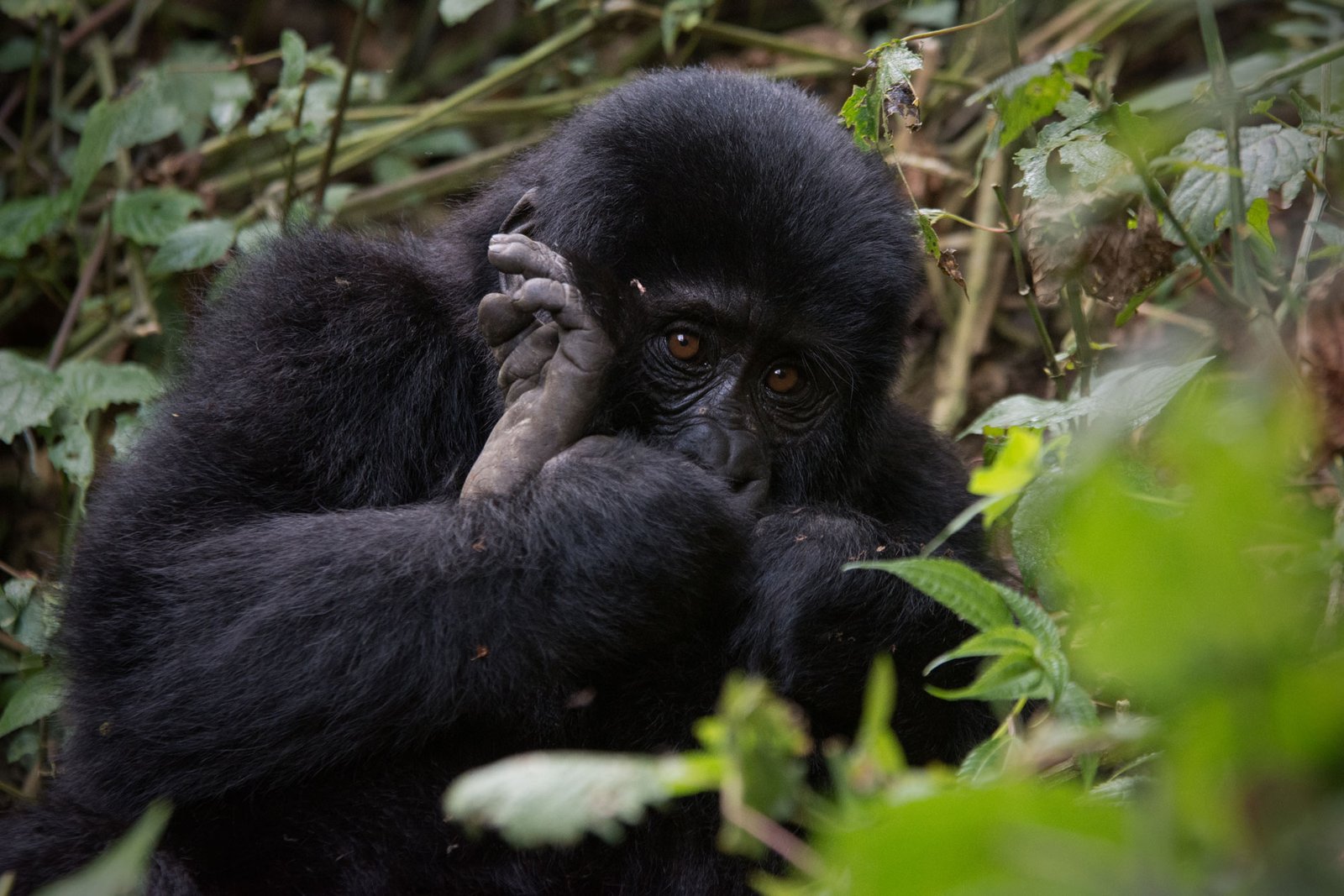
1. What Is the Average Duration of Gorilla Trekking in Rwanda?
Most visitors should plan for approximately two to six hours for the complete forest trekking experience. This is a general planning estimate rather than a guaranteed duration. Some groups find their assigned gorilla family relatively quickly, while others may spend several hours walking through the forest.
Gorilla trekking takes place in Volcanoes National Park, a protected area in north-western Rwanda. The park contains part of the Virunga volcanic mountain range and provides habitat for mountain gorillas.
Unlike a conventional game drive, where visitors follow established roads, gorilla trekking involves walking through forested mountain terrain. The gorillas move freely within their habitat, so trackers and guides must locate them before leading visitors to their position.
The duration can therefore vary considerably from one trekking group to another, even on the same day.
Typical trekking duration
| Stage | Approximate time |
|---|---|
| Arrival, registration and briefing | 30–60 minutes |
| Travel to the assigned starting point | Varies by location |
| Walking and searching for gorillas | Approximately 1–5 hours or more |
| Observing the gorillas | Strictly limited to one hour |
| Return journey | Varies by terrain and distance |
These estimates are useful for planning, but they should not be treated as a fixed timetable. The walking and searching stage is particularly unpredictable.
2. Why Does Gorilla Trekking Take Different Amounts of Time?
The main reason for variations in trekking duration is that mountain gorillas are wild animals. They do not remain in one place waiting for visitors. Their movements are influenced by feeding opportunities, vegetation, social interactions and other natural behaviours.
Consequently, the trekking team cannot always predict exactly where a gorilla family will be when visitors arrive.
Several factors determine how long a trek takes.
Location of the assigned gorilla family
The distance between the trekking starting point and the gorilla family is one of the most important factors.
Some gorilla families may be found relatively close to the starting area, allowing visitors to reach them after a shorter walk. Others may be deeper inside the forest or higher along the mountain slopes.
Before visitors begin trekking, park authorities organise groups and assign them to particular gorilla families. Trackers help locate the animals and communicate their positions to the guides.
A family located close to the starting area may result in a shorter trek, while one farther away may require several hours of walking.
Mountainous terrain
Rwanda’s gorilla habitat includes steep slopes, thick vegetation and uneven forest trails. Walking through this environment can be more demanding than walking along ordinary hiking paths.
The terrain may involve:
- Steep uphill sections.
- Slippery forest trails.
- Muddy ground after rainfall.
- Dense vegetation.
- Uneven surfaces and exposed roots.
- Changes in elevation.
Even when the distance appears relatively short, the terrain can make the journey slower.
Movement of the gorillas
Mountain gorillas spend much of their day feeding, resting and moving within their home ranges. A family may change its location before or during the search.
Trackers use their knowledge of the animals and information gathered in the forest to locate them. Nevertheless, the search may take longer when the gorillas have moved farther than expected.
Weather conditions
Rainfall can affect the speed and difficulty of a trek. Trails may become slippery, vegetation can become wet, and some sections may be more difficult to navigate.
Weather conditions can also change quickly in mountainous environments. Visitors should therefore prepare for both wet and relatively dry conditions, regardless of the season.
Fitness and walking pace
A group’s walking pace also affects the total trekking time. Visitors with different fitness levels may need occasional breaks, particularly when climbing steep slopes.
Guides generally manage the pace of the group and provide opportunities to rest when necessary. However, travellers should be prepared for a physically demanding walk.
3. How Much Time Do You Spend with Mountain Gorillas?
Although the entire trekking experience may take several hours, visitors are permitted to spend one hour observing the mountain gorillas once they have reached the assigned family.
This is an important distinction when calculating the average duration of gorilla trekking in Rwanda.
The one-hour observation period is regulated to protect the gorillas and minimise the effects of human presence. It gives visitors an opportunity to observe their natural behaviour without exposing the animals to prolonged disturbance.
During this hour, visitors may see gorillas:
- Feeding on leaves, stems and other vegetation.
- Resting in the forest.
- Grooming one another.
- Playing and interacting with younger members.
- Moving through the vegetation.
- Displaying social behaviours within the family.
One of the most memorable moments may be seeing a silverback, the mature male that often leads a gorilla family. Visitors may also observe mothers caring for their infants and younger gorillas playing nearby.
Photography is generally permitted, subject to park rules. Visitors should follow their guide’s instructions, maintain the required distance and avoid using flash.
The hour can pass surprisingly quickly, especially when the gorillas are active. It is therefore worth preparing a camera beforehand and taking time to appreciate the experience rather than concentrating entirely on photographs.
4. What Happens Before the Gorilla Trek Begins?
The forest walk is only one part of the overall experience. Visitors must complete several important steps before entering the forest.
Understanding these arrangements helps travellers plan their morning and avoid arriving late.
Early morning arrival
Gorilla trekking normally begins early in the morning. Visitors travel to the park headquarters for registration and the day’s briefing.
Travellers staying in accommodation around Musanze or elsewhere in the region should organise their transport in advance. Those travelling from Kigali need to allow additional time for the road journey.
The precise departure time depends on accommodation location and the arrangements made with the tour operator.
Registration and permit verification
At the park headquarters, officials verify visitor details and trekking permits.
A valid gorilla trekking permit is essential. Travellers should arrange their permits through the appropriate official channels or a reputable tour operator before arriving for the activity.
Visitors should carry the required identification documents and follow any instructions provided before the trekking day.
Briefing and allocation of gorilla families
Before entering the forest, visitors receive information about trekking rules, safety procedures and responsible gorilla viewing.
Groups are assigned to different habituated gorilla families. Guides explain what visitors should expect and provide instructions on how to behave around the animals.
This briefing is important because mountain gorillas are wild animals, and responsible tourism requires visitors to respect their space.
Beginning the forest walk
After the briefing, visitors travel to their designated trekking starting points. Depending on the assigned family, this may involve a short or longer transfer.
Once the trek begins, visitors follow their guide and move through the forest until the trackers locate the gorillas.
The time spent on this stage is the least predictable part of the day.
5. Does the Time of Year Affect Gorilla Trekking Duration?
Yes. Weather and trail conditions can influence the time required to complete a trek. However, there is no season in which every trek is guaranteed to be shorter.
Rwanda has two main rainy seasons and two relatively drier periods. These seasonal patterns can affect forest conditions, vegetation and the ease of walking.
Drier periods
The relatively drier periods generally occur from June to September and from December to February.
During these months, visitors may encounter trails that are less muddy than during periods of heavier rainfall. This can make certain sections of the trek easier to navigate.
However, a dry season does not guarantee a short trek. Gorilla families still move naturally, and their location remains a major factor in determining the duration.
Rainier periods
The main rainy periods generally occur from March to May and from October to November.
Rain can make forest trails muddy and slippery. Visitors may need to walk more carefully, particularly on steep slopes.
The rainy season can also provide lush vegetation and beautiful forest scenery. Travellers who visit during these months should prepare with suitable waterproof clothing and footwear.
Which season should you choose?
The best time for gorilla trekking depends on your travel priorities. Visitors who prefer relatively easier trail conditions may favour the drier periods. Those with more flexible schedules may also consider the rainy months.
Regardless of when you travel, allow enough time for the possibility of a longer trek.
6. How Difficult Is Gorilla Trekking in Rwanda?
Gorilla trekking is a physically active experience. Its difficulty varies according to the location of the gorilla family, the elevation, the terrain and the visitor’s physical condition.
Some treks involve manageable walks through forested areas, while others require climbing steep slopes and navigating dense vegetation.
Visitors should not assume that every trek will be an easy walk.
Physical preparation
A reasonable level of fitness can make the experience more comfortable. Travellers do not necessarily need to be professional hikers, but they should be prepared to walk for several hours.
Useful preparation includes:
- Walking regularly before the trip.
- Practising on uneven or sloping ground.
- Improving general stamina.
- Wearing comfortable, broken-in hiking boots.
- Carrying only essential items.
- Taking water and following the guide’s instructions.
Visitors with mobility limitations or specific physical concerns should discuss their needs with the tour operator and park authorities before booking. This allows the appropriate arrangements and available options to be considered.
Can older travellers participate?
Age alone does not determine whether someone can comfortably complete a trek. Physical fitness, mobility and the difficulty of the assigned route are important considerations.
Rwanda’s gorilla trekking age requirement should also be considered when planning a family trip. The standard minimum age for gorilla trekking is 15 years.
Travellers should confirm current permit conditions and discuss individual circumstances with the relevant authorities before making arrangements.
7. How Long Should You Set Aside for the Entire Gorilla Trekking Day?
Although the forest trek itself may take approximately two to six hours, it is sensible to reserve most of the day for the activity.
This is because the complete experience includes transport, registration, briefing, walking, gorilla observation and the return journey.
The following is an illustrative schedule. Actual times may vary depending on the accommodation, starting point and location of the gorilla family.
| Activity | Illustrative time |
|---|---|
| Departure from accommodation | Early morning |
| Arrival at park headquarters | Before the briefing |
| Registration and briefing | Early morning |
| Transfer to trekking starting point | After briefing |
| Forest trekking and search | Variable |
| One-hour gorilla observation | After locating the family |
| Return from the forest | Variable |
| Return to accommodation | Depending on trek duration |
Travellers should avoid arranging another time-sensitive activity immediately after the trek. A longer search or difficult return walk may affect the rest of the day’s schedule.
For visitors travelling from Kigali, the road journey to the park region also needs to be considered. A same-day return may be possible with careful planning, but it can make for a long day.
A more relaxed itinerary includes an overnight stay near the park before trekking. This reduces the pressure of travelling a long distance early in the morning.
8. Can You Combine Gorilla Trekking with Other Activities in Rwanda?
Yes, but the amount of time available after trekking depends on when the gorillas are located and how long the return journey takes.
Travellers who complete a relatively short trek may have time for another activity later in the day. Those who spend several hours in the forest may prefer to return to their accommodation and rest.
The key is to avoid creating an itinerary that depends on finishing the trek at an exact time.
Golden monkey trekking
Golden monkey trekking is another popular wildlife experience in Rwanda. It takes place in the same broader volcanic region and offers an opportunity to observe a different primate species.
Visitors interested in adding this activity to their trip can explore the 1-Day Golden Monkey Trekking Rwanda experience.
Golden monkey trekking is a separate activity and should be planned around the gorilla trekking schedule. Travellers should confirm availability, permit arrangements and whether the activities can comfortably fit into their itinerary.
Exploring the Musanze region
Musanze provides access to several attractions and experiences around the Virunga region.
Depending on available time, visitors may consider exploring local communities, enjoying the surrounding scenery or learning about the region’s culture.
However, it is usually better to schedule additional sightseeing on another day rather than rushing through activities immediately after a demanding trek.
Exploring Volcanoes National Park
Beyond gorilla trekking, the park region is known for its volcanic landscapes, forests and other wildlife experiences.
Visitors can learn more about the destination through the Volcanoes National Park visitor information page.
For a broader safari itinerary, Frena Adventures can help travellers organise activities according to their available time and interests.
9. How Can You Prepare for a Comfortable Gorilla Trek?
Good preparation can make a significant difference to the overall experience. Since the trekking duration is not fixed, visitors should pack and plan for a longer forest walk.
Wear suitable clothing
Choose comfortable clothing that protects your arms and legs from vegetation. Long-sleeved shirts and long trousers are practical choices.
Forest conditions can be wet and cool, particularly at higher elevations. A lightweight waterproof jacket is useful.
Choose proper footwear
Hiking boots with good grip are recommended because forest trails can be uneven, muddy and slippery.
Avoid wearing brand-new footwear for the first time on trekking day. Comfortable, properly fitted boots can reduce the risk of blisters and discomfort.
Carry essential supplies
A small daypack can hold the items needed during the trek.
Consider carrying:
- Drinking water.
- A light snack, if permitted and appropriate.
- A waterproof jacket.
- A camera or phone.
- Extra batteries or a power bank.
- Personal medication.
- A small amount of cash for any local arrangements.
Porters may be available to assist with carrying bags and navigating difficult sections. Hiring a porter can also support local livelihoods.
Follow the guide’s instructions
Visitors must listen carefully to their guides and follow park regulations throughout the experience.
This includes maintaining the required distance from the gorillas, avoiding flash photography, keeping voices low and following all health and safety instructions.
Anyone who feels unwell should inform the guide or relevant park staff. Gorilla conservation and visitor health are both important.
10. How Should You Plan Your Rwanda Gorilla Trekking Itinerary?
The best itinerary depends on where you are arriving from, how many days you have available and whether you want to include other destinations.
For many visitors, an overnight stay near the park before trekking is a convenient option.
Example: Two-day gorilla trekking itinerary
| Day | Activities |
|---|---|
| Day 1 | Travel to Musanze, check into accommodation and prepare for the trek |
| Day 2 | Early departure, park registration, briefing, gorilla trekking and return to accommodation |
This arrangement gives travellers time to settle in before the early morning start.
Example: Three-day Rwanda gorilla safari
| Day | Activities |
|---|---|
| Day 1 | Arrive in Kigali and explore the city, depending on arrival time |
| Day 2 | Travel to Musanze and explore the surrounding region |
| Day 3 | Gorilla trekking in the morning and return according to the trekking duration |
This itinerary can be adjusted to include additional activities or an extra night near the park.
Travellers with more time may combine their gorilla experience with other destinations in Rwanda. The important consideration is to allow enough time for road transfers and avoid scheduling activities too tightly.
Frena Adventures can assist with organising a practical itinerary that takes the unpredictable duration of gorilla trekking into account.
Frequently Asked Questions About the Average Duration of Gorilla Trekking in Rwanda
1. What is the average duration of gorilla trekking in Rwanda?
Gorilla trekking generally takes approximately two to six hours in the forest, although some treks may be shorter or longer. The duration depends mainly on the location of the assigned gorilla family, terrain, weather and walking pace.
2. Is gorilla trekking in Rwanda a full-day activity?
It can occupy most of the day, particularly when the gorilla family is far from the starting point. Although some visitors finish relatively early, it is best to keep the rest of the day flexible.
3. How long do tourists spend with mountain gorillas?
Visitors are allowed one hour with the assigned habituated gorilla family. This period begins once the group reaches the gorillas and is strictly regulated.
4. Does every gorilla trekking group take the same amount of time?
No. Different groups are assigned to different gorilla families, and the families may be located at different distances from the starting points. This means one group may finish considerably earlier than another.
5. What is the shortest possible gorilla trek in Rwanda?
Some visitors may find their assigned gorilla family relatively close to the starting point, resulting in a shorter trek. However, there is no guaranteed minimum duration because the animals move freely within the forest.
6. Can gorilla trekking take more than six hours?
Yes. Depending on the location of the gorillas, terrain and weather conditions, a trek may take longer than six hours. Visitors should be prepared for a demanding walk and avoid making strict plans immediately afterwards.
7. What time does gorilla trekking start in Rwanda?
Gorilla trekking generally begins early in the morning with registration and a briefing at the park headquarters. Visitors should follow the reporting time provided for their particular trekking date.
8. Is gorilla trekking difficult for beginners?
It can be challenging, but beginners who are reasonably fit and properly prepared can participate. The difficulty depends on the route, elevation, weather and physical condition of the visitor.
9. Does the rainy season make gorilla trekking longer?
Rain can make trails muddy and slippery, which may slow down the walking pace. However, the location of the gorilla family remains a major factor, so rainfall does not automatically mean a longer trek.
10. Can I combine gorilla trekking and golden monkey trekking?
Yes, both activities can be included in a Rwanda itinerary. However, they are separate experiences with their own arrangements and permit requirements. Travellers should confirm schedules and availability before booking.
11. Should I stay near Volcanoes National Park before trekking?
Staying near the park is a convenient option, especially for visitors travelling from Kigali. It reduces the pressure of making a long early-morning journey before registration and briefing.
12. How many days should I spend in Rwanda for gorilla trekking?
A short trip can be organised around a one-day trekking experience, but allowing two or three days in the region provides more flexibility. Travellers with additional time can explore other destinations and experiences in Rwanda.
Conclusion: Allow Enough Time for Your Gorilla Trekking Experience
The average duration of gorilla trekking in Rwanda is approximately two to six hours in the forest, although the actual experience can take less or considerably more time. The location of the assigned gorilla family, weather, terrain and walking pace all influence how long visitors spend searching for the animals.
The one-hour observation period is fixed, but the journey to reach the gorillas is unpredictable. This is why travellers should plan for a flexible day, prepare for a potentially demanding walk and avoid arranging activities that require them to finish at a specific time.
Gorilla trekking is not simply about reaching the animals as quickly as possible. It is an opportunity to experience Rwanda’s mountain forests, learn about conservation and observe one of the world’s most remarkable primates in its natural environment.
With thoughtful preparation and a realistic itinerary, the experience can become a highlight of any Rwanda safari. Frena Adventures can help you organise your journey, understand the trekking arrangements and make the most of your visit to Rwanda.